
Gum Recession Solution
Gum Recession Solution
Gums, the fleshy covering of the jawbones inside our mouths, provide several vital functions, including serving as a protective shield for the roots of our teeth. Healthy gums extend all the way up to the base of the teeth, reaching the edge of the armor-like enamel that covers the exposed surfaces of these natural chewing tools. The roots are fully covered by flesh, and as a result have no coating of enamel, which would be superfluous.
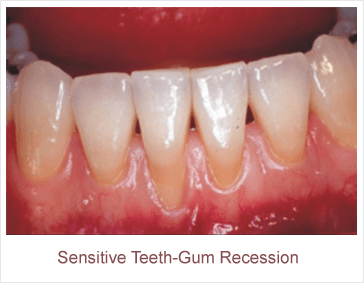
However, under some circumstances, the gum can flow away from the base of the enamelled area, exposing the roots themselves. Known as “gum recession,” this has serious consequences for the health and longevity of your teeth if it goes untreated. The soft tooth material, called dentin, is exposed to the air with no protective “lacquering” of enamel in between.

The exposure of dentin due to receding gums can have several undesirable results, such as:
- Extremely sensitive, potentially painful teeth and gums. Though enamel is inert and has no feeling, dentin is quite a bit different. Microscopic tubules run through it and contain living cells and nerve tissue. These extend up to the surface, making the dentin painfully sensitive.
- Dentin is soft and does not have the toughness and durability of enamel. The wear and tear of oral use can easily carve grooves into the exposed root surfaces, badly damaging the teeth and causing additional problems such as sensitive teeth, bad breath and tooth lose.
- The softness of dentin means it is vulnerable to decay. People tend to avoid brushing exposed roots because the contact of bristles and live tooth surface is painful. Thus, bacteria and debris accumulate right where they are most likely to produce decay. Even partial failure to brush thoroughly can raise the decay risk greatly, while vigorous brushing may damage the dentin mechanically – a true “catch-22″ situation.
- Teeth appear to be “long” with more yellow at the gum line area (exposed root).
Why Gum Recession Occurs
Gum recession, like practically everything else, happens in response to known factors. If these factors are present in a dental patient, they are a good indication that gum recession should by checked for. Some of the possible triggers for this condition include:
- Poor toothbrush use is the most frequent cause for gum recession. Excessively vigorous brushing, stiff bristles on the toothbrush, or abrasive toothpaste can all be culprits in sending your gums into retreat or worsening an existing condition.
- Another very common trigger for gum recession is bruxism, the clenching and grinding of teeth at night during the delta phase of sleep. Described in more detail in Section IV, this problem causes the teeth to grow weaker along the gumline, setting the stage for recession.
- Periodontal disease, or ailing gums, is a major cause of gums receding. The gums shrink back as they are progressively damaged by this infection.
- In some cases, genetics are the cause for the retreat of gums.
Solutions for Gum Recession Sensitive Roots
In many cases, gum recession can be dealt with by switching dental products. A dentist can give you solid, science based advice on which toothpaste and brush to use in order to halt the retreat of your gums. Some of the most commonly recommended are Colgate Regular and Rembrandt, which each have minimal abrasive tendencies or for treatment for receding gums.
Desensitizing toothpastes like Crest Sensitivity, Denquel, or Sensodyne are the next step up, and are often suggested if the roots are exposed enough to make brushing unpleasant or painful. In no case should people with exposed roots use tartar control toothpastes or those with abrasives, which will exacerbate the problems and be hideously uncomfortable to boot.
To increase your comfort when your gums are receding, avoiding acidic foods and drinks may be a prudent step, including citrus, yogurt, apple juice, and wine. If you do eat an acidic food, you should brush your teeth prior to consuming it. Brushing immediately afterward may cause problems and discomfort. Similarly, many commercial mouthwashes increase gum sensitivity of exposed roots. Cold liquids and foods (chilled drinks, ice cream, etc.) may hurt these roots, too.
The dentist’s office also has several beneficial receding gums treatment to offer. Every six months, you should visit your dentists to receive a fluoride treatment, which will lower the sensitivity of the exposed roots and greatly lessen the risk that decay will take hold. In cases where the roots are extremely tender, an additional procedure is available through high quality dentist’s offices such as ours. This involves coating the root surface with a transparent desensitizing fluid which soaks into the dentin and creates a protective layer atop it. Colored restorative agents are available for extraordinary cases where such a treatment is deemed appropriate. Occasionally even a dental laser can be utilized to seal the root surface!
If you would like to know more about gum recession solution, call 630-749-2523 today or make an appointment online.
Check Up
Make an Appointment Today!
Need a Smile Makeover, full mouth reconstruction or cosmetic procedure like veneers or crowns? Set up an appointment now without picking up the phone.
Hours
Monday: 11am – 8pm
Tuesday: 10am – 7pm
Wednesday: 8am – 4pm
Thursday: 7am – 3pm
Friday: Closed
Saturday: Closed
Sunday: Closed